
India has been struggling to control the current account deficit that hit an all-time high of 6.7 percent of GDP in the December quarter.

Brent crude was trading at $105 a barrel on Friday while US oil was at $96.75.

India's record current account deficit has been a key reason behind why Standard & Poor's and Fitch Ratings cut their outlooks on the country's sovereign rating to 'negative' last year.

Two senior ministry officials, who declined to be named, said the aim was to attract more capital flows from wealth funds in West Asian countries.

Earlier, Finance Minister P Chidambaram had said he thought the figure was 262 tonnes.

Mayaram said the concerns over the pace of implementing economic reforms were "overstated".

Overall, merchandise imports rose 10.9 per cent to $41.95 billion.

Parliamentary panel seeks changes in crude import norms.
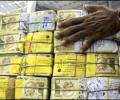
Keeping that much money out of the banking system has created a liquidity deficit that has forced banks to borrow as much as RS 1.6 trillion from the central bank to meet daily funding needs.

His officials are working on a series of steps to attract at least $20 billion in new investment to fund the deficit without depleting India's $300 billion in forex reserves.

Will help to reduce current account deficit and restore growth.
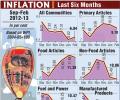
The wholesale price index, the main inflation indicator, rose an annual 6.84 per cent in February, higher than the 6.54 per cent rise estimated by analysts.

Cabinet will take a decision on a conciliation offer from Vodafone.
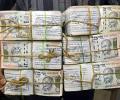
The FinMin has built up a cash surplus of about Rs 80,000 crore.

India's policy to subsidise retail prices of fuels such as diesel, which accounts for about 40 per cent of refined fuel consumption, is a major drain on the budget.

The minimum threshold to come under GAAR will be Rs 3 crore.

The economy, which grew at 6.5 per cent in the year ended March 2012, is expected to grow 5.7 per cent to 5.9 per cent this fiscal year, the slowest since 2002/03.

Chidambaram said he expected gold imports to touch $40 billion in the current fiscal year to end-March, down 31 percent from the year-ago bill of $58 billion.

An estimated 177 million Muslims in India, the largest Muslim minority population in the world, are unable to use Islamic banks because laws covering the sector require banking to be based on interest, which is forbidden in Islam.

Prime Minister Manmohan Singh's government is in a race against the clock to pass reforms economists say are needed to breathe life into Asia's third-largest economy.
 © 2025 Rediff.com - Investor Information - Advertise with us - Disclaimer - Privacy Policy - Sitemap - Feedback - About us - Terms of use - Grievances